

In Ayurveda, what's commonly called piles falls under a broader classical term — Arsha — and it's rarely discussed in isolation from digestion. Classical texts trace it back to Agni, the digestive fire, and frame lasting comfort as something built through diet, habit, and consistent herbal support, rather than a single fix. Here's what that framework actually looks like.
Classical Ayurveda ties Arsha closely to sluggish or irregular Agni. When digestion slows down, waste is thought to linger longer than it should, and over time, this is considered a root contributor to strain and discomfort in the region — which is why Ayurvedic approaches to Arsha almost always start with digestion, not just the local symptom.
One specific habit classical texts flag repeatedly is Vega Dharana — suppressing natural bodily urges, particularly the urge to pass stool. This is considered one of the more significant lifestyle contributors to digestive strain over time, alongside low-fibre eating and long periods of sitting.
Haritaki, Bibhitaki, and Amlaki — together known as Triphala — form the backbone of most classical Arsha formulations. Haritaki is linked to healthy elimination, Bibhitaki to respiratory comfort, and Amlaki, rich in natural Vitamin C, to general vitality. Together they're valued for supporting regular, comfortable digestion.
Beyond Triphala, classical formulations often add Aloe Vera for its soothing qualities, Yashtimadhu for its calming nature, Gokshura for urinary and reproductive wellness, Kutaj for gut balance, and Arjuna for general cardiovascular support — a stack built on working together rather than any single "hero" ingredient.
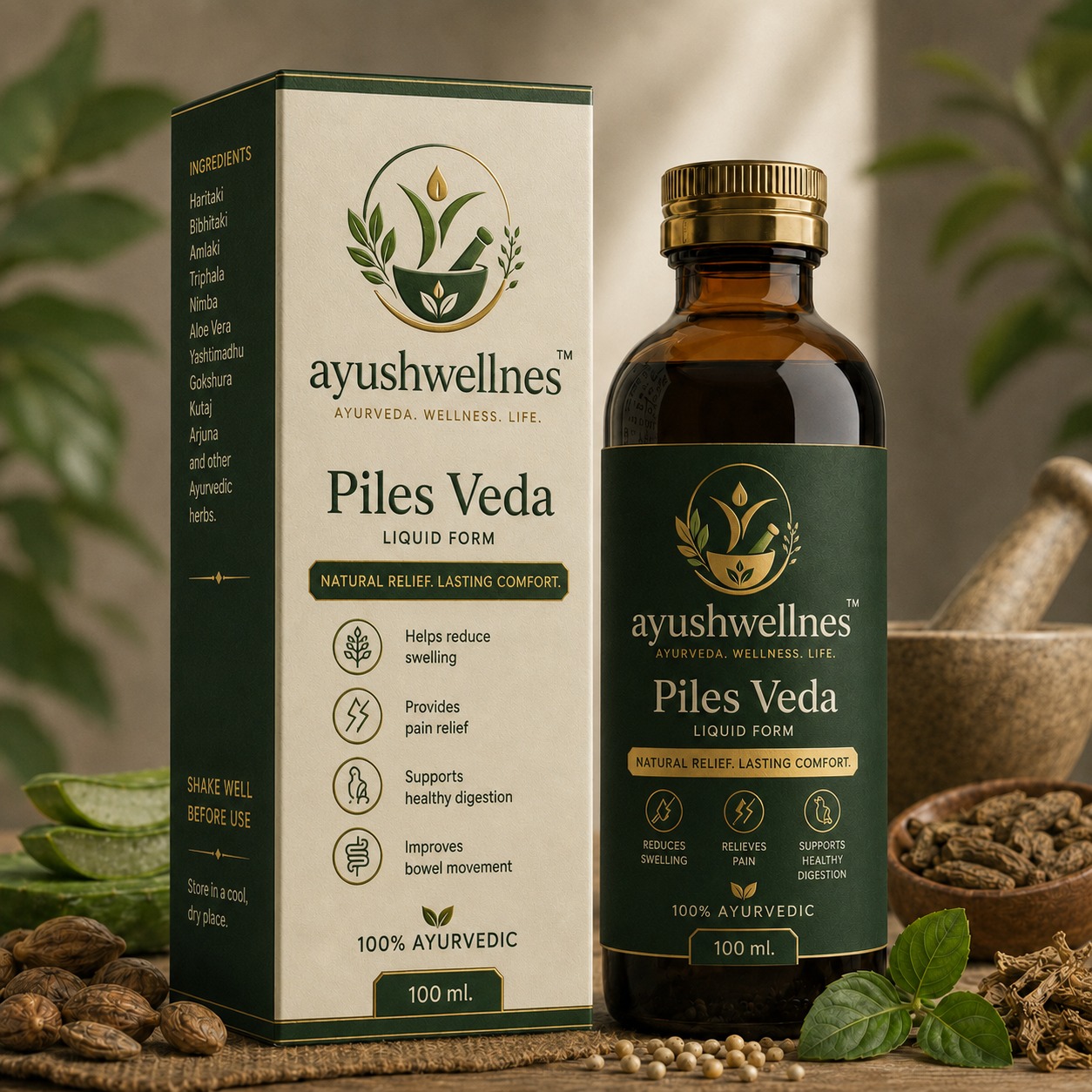
Piles Veda draws on this exact classical stack, in a liquid form meant to be taken consistently — alongside adequate fibre, hydration, and movement, not instead of them. If symptoms are severe, persistent, or involve bleeding, Ayurveda itself would point you toward a doctor rather than self-management alone.
Does Ayurveda recommend any dietary changes alongside herbs?
Yes — classical texts consistently pair herbal support with diet. Adequate fibre, warm cooked food over excess raw or fried food, and staying hydrated are recurring recommendations across Ayurvedic literature on digestive wellness.
How long does classical Ayurveda suggest herbs like Triphala should be used?
Ayurveda generally frames herbal support as a gradual, cumulative practice rather than a quick fix — consistency over weeks and months, alongside habit changes, is the traditional approach rather than short bursts of use.
Statements have not been evaluated for medical accuracy — consult a doctor before use.