

Ayurveda has always treated hair as more than a cosmetic concern. Classical texts call the practice Kesha Chikitsa, and frame healthy hair as a reflection of deeper nourishment — tied to diet, daily ritual, and consistent, gentle oiling rather than any single product or quick intervention.
In Ayurvedic physiology, hair is considered a byproduct of Asthi Dhatu — the bone tissue. This is part of why classical texts link hair vitality to overall nourishment and internal balance, rather than treating it as something separate that can be fixed from the outside alone.
Champi — rhythmic head massage with warm herbal oil — is a long-standing Dinacharya practice. Beyond the herbs themselves, the massage is valued for the ritual of touch and stillness it brings, and for encouraging a regular, unhurried care routine rather than sporadic attention.
Classical Ayurveda points to stress, irregular sleep, harsh chemical exposure, and seasonal change as everyday factors that can affect hair over time. As with most Ayurvedic thinking, the emphasis is on steady lifestyle habits working alongside any herbal routine, not instead of it.
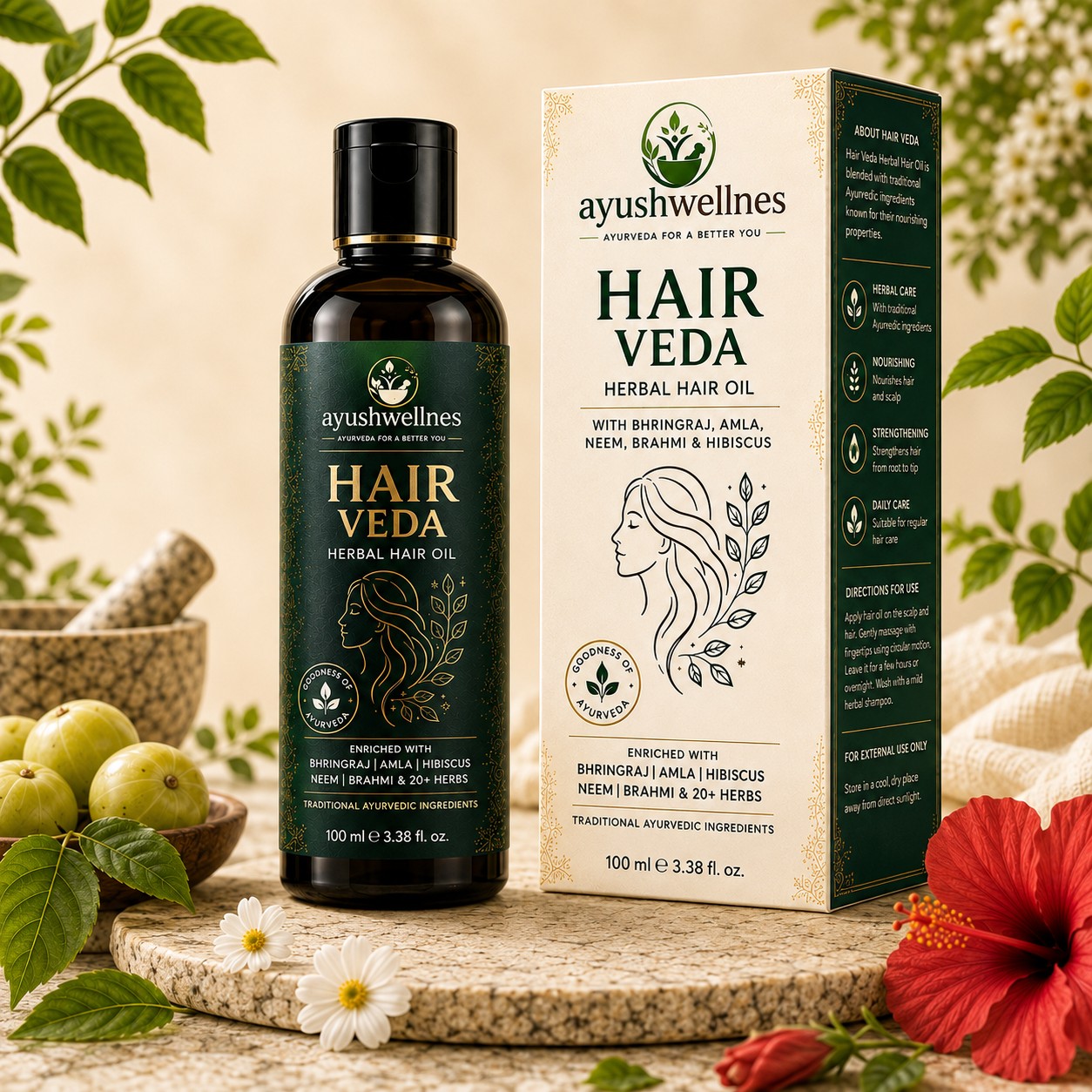
Bhringraj is often called the "king of hair herbs" in Ayurvedic texts, traditionally used to nourish the scalp and support healthy-looking hair. Amla, rich in natural Vitamin C and antioxidants, is valued for adding shine and strength, while Neem is prized for its purifying qualities, Brahmi for nourishing the scalp, and Hibiscus for softness — together forming the classical basis of most Ayurvedic hair oils.
Hair Veda brings together Bhringraj, Amla, Neem, Brahmi, Hibiscus and over twenty other classical herbs in a lightweight, non-greasy formula — built for the same principle of regular, gentle care that Ayurveda has always emphasised, rather than a one-time fix.
How often does Ayurveda recommend oiling hair?
Most classical texts favour regularity — a couple of times a week as part of a steady routine — over occasional, heavy application. Consistency is considered more valuable than frequency alone.
Can Ayurvedic hair oil replace a haircare routine entirely?
Ayurveda frames oiling as one part of a broader routine — alongside diet, sleep, and gentle handling of hair — rather than a standalone fix. It works best woven into daily habits, not as a substitute for them.
Statements have not been evaluated for medical accuracy — consult a doctor before use.